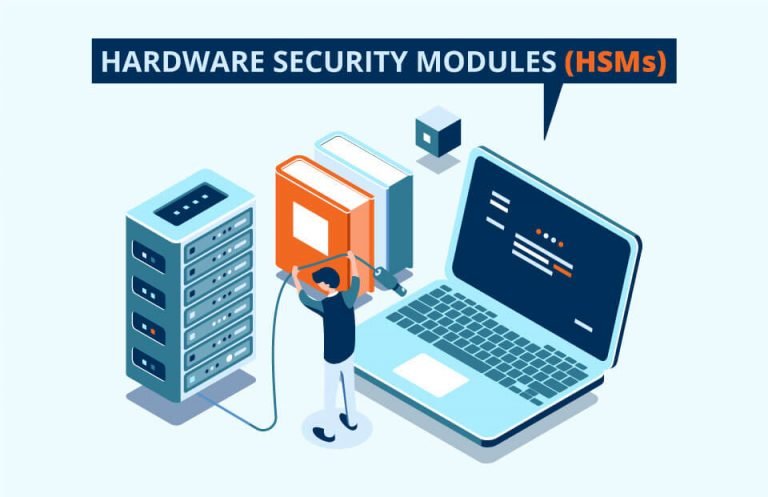
In the relentless digital landscape, where data breaches loom large and cyber threats evolve daily, the security of cryptographic keys isn't just a best practice—it's the bedrock of digital trust. For organizations generating and managing critical RSA keys, relying on anything less than hardened security is a gamble too risky to take. This is precisely why Cisco Hardware Security Modules (HSMs) for RSA Key Generation are indispensable, offering a fortified, tamper-resistant environment that ensures these foundational cryptographic assets remain impregnable.
Think of it as the ultimate digital vault for your most sensitive secrets. When your business generates RSA keys, whether for digital certificates, code signing, or securing sensitive communications, these keys become the very identity and integrity of your operations. An HSM safeguards them, making key compromise—the Achilles' heel of many security architectures—virtually impossible.
At a Glance: Why Cisco HSMs Are Crucial for RSA Key Generation
- Ultimate Key Protection: HSMs are dedicated, tamper-resistant physical devices that act as an impenetrable vault for cryptographic keys, ensuring they're always secure.
- Hardware-Based Trust: RSA keys generated within an HSM leverage true random number generators (TRNGs) and never leave the hardware boundary, drastically reducing software vulnerabilities.
- FIPS Compliance: Essential for regulated industries, HSMs are certified to rigorous FIPS 140-2 standards, providing verifiable assurance for critical RSA operations.
- Enhanced Performance: Offload CPU-intensive cryptographic tasks like RSA key generation and signing to the HSM, boosting application performance and efficiency.
- Centralized Key Management: Simplify the lifecycle management of all your RSA keys, from generation to destruction, with robust audit trails and access controls.
- Versatile Deployment: Whether network-attached, embedded, or cloud-based, Cisco-compatible HSM solutions fit diverse architectural needs, from data centers to hybrid cloud.
The Unseen Guardian: What Exactly is an HSM?
A Hardware Security Module (HSM) is a specialized, physical computing device designed with one paramount purpose: to protect cryptographic keys and perform cryptographic operations within a secure, tamper-resistant environment. Imagine it as a digital fortress, purpose-built to manage, generate, safeguard, protect, process, and audit cryptographic keys. These devices are critical cybersecurity components, acting as the backbone for secure cryptographic key management and operations.
When an organization like yours deploys an HSM, it's investing in a trusted solution for safeguarding sensitive digital assets. HSMs perform high-assurance cryptographic operations, ensuring your keys—especially crucial RSA private keys—never leave the secure hardware. They establish digital trust, prevent key exposure even if broader networks are breached, and help you meet stringent regulatory requirements.
You'll find HSMs powering the security of global banking systems, verifying online transactions, protecting healthcare data, securing government services, and hardening cloud environments. They quietly handle millions of daily transactions, verifying identities, authorizing transfers, and ensuring privacy—all by keeping those vital keys under an unbreakable lock and key.
Beyond Software: Why Hardware-Based Key Generation is Non-Negotiable for RSA
In the world of cryptography, the strength of an algorithm like RSA is only as good as the secrecy of its private key. Traditionally, some organizations might generate RSA keys using software methods. While convenient, this approach introduces significant vulnerabilities:
- Exposure to Software Exploits: Keys generated and stored in software are susceptible to malware, operating system vulnerabilities, and memory dumps. If the server is compromised, the keys are gone.
- Lack of True Randomness: Software-based random number generators (RNGs) can be predictable, especially if the entropy sources are weak, leading to weaker, more easily guessable RSA keys.
- No Tamper Protection: Software doesn't offer physical protection. Anyone with access to the server, or even remote root access, could potentially extract keys.
This is where the paradigm shifts dramatically with hardware-based key generation, particularly when using robust solutions like those offered or integrated by Cisco. With an HSM, your RSA keys are generated using hardware-based true random number generators (TRNGs). These TRNGs collect entropy from unpredictable physical phenomena, ensuring a truly random, cryptographically strong key every single time.
Crucially, once an RSA key is generated within an HSM, it adheres to a "black box" model for key usage. This means the private key never leaves the HSM’s secure environment during its entire lifecycle. When an application needs to digitally sign a document, encrypt data, or decrypt a message using that RSA key, it sends the data to the HSM for processing. The HSM performs the cryptographic operation internally and returns only the result, keeping the private key safely sequestered.
This hardware-centric approach fundamentally elevates your security posture. It removes the keys from the vulnerable general-purpose computing environment, making compromise exponentially harder. For any organization serious about securing its digital identity and data integrity, especially within a sophisticated network architecture, this level of protection for RSA key generation and usage is simply non-negotiable.
A Deep Dive into HSM Security Levels: FIPS 140-2 Explained
Not all HSMs are created equal. To help organizations assess and compare the security of cryptographic modules, the U.S. government established FIPS Publication 140-2 (Federal Information Processing Standard). This standard defines four increasing levels of security, each building upon the last with more stringent requirements for physical and logical protection. Understanding these levels is critical when selecting a Cisco HSM solution for your RSA key generation needs.
- FIPS 140-2 Level 1: This is the most basic level, requiring only production-grade components and basic cryptographic functionality. While it provides hardware-based cryptography, it offers minimal physical security and might be suitable for testing environments or low-risk applications where physical access is tightly controlled.
- FIPS 140-2 Level 2: At this level, the HSM includes tamper-evident coatings or seals. These mechanisms are designed to indicate unauthorized access attempts, making it clear if someone has tried to physically open or alter the device. It's a step up in physical protection, often used in environments where basic tamper detection is sufficient.
- FIPS 140-2 Level 3: This is the most commonly required level for many regulated industries, including finance and government, and is often the standard for securing critical RSA keys. Level 3 HSMs provide tamper-resistance. This means they have robust physical security features that actively prevent unauthorized access and, crucially, include mechanisms that zeroize (delete) keys upon detection of tampering. This ensures that if an attacker attempts to breach the device, the sensitive RSA key material is instantly destroyed, preventing its extraction.
- FIPS 140-2 Level 4: Offering the highest assurance, Level 4 HSMs provide comprehensive protection against sophisticated, persistent attacks. They are designed to detect and respond to even the most determined physical penetration attempts, protecting against extreme environmental conditions or highly skilled attackers. These are typically reserved for military, national ID systems, or environments where the compromise of an RSA key would have catastrophic national security implications.
For most enterprise applications involving RSA key generation, especially those under regulatory scrutiny (like PCI DSS, HIPAA, or GDPR), a FIPS 140-2 Level 3 certified HSM is the standard. It strikes a balance between robust security and practical deployment, ensuring that your RSA private keys are generated and used within a highly secure, tamper-resistant environment. When you're considering HSMs in your Cisco infrastructure, always verify the FIPS certification level to match your organization's specific threat model and compliance obligations.
Inside the Digital Vault: Core Features that Make HSMs Indispensable
The magic of an HSM isn't just in its tamper-resistant shell; it's in the sophisticated array of features packed within, all working in concert to secure your critical RSA keys. Understanding these core mechanisms will illuminate why HSMs are truly the gold standard for cryptographic key management.
Secure Cryptographic Key Management
At its heart, an HSM is a master of keys. It manages the entire lifecycle of cryptographic keys, from secure generation to eventual destruction. This includes:
- Hardware-Based True Random Number Generators (TRNGs): As mentioned, HSMs use TRNGs that collect entropy from unpredictable physical phenomena, ensuring that every RSA key generated is genuinely random and cryptographically strong. This contrasts sharply with potentially weaker software-based RNGs.
- Secure Storage: Once generated, keys are stored securely within the HSM’s hardened, isolated environment. They are typically encrypted using master keys that are themselves protected by the HSM's physical security, creating a secure chain of custody.
- Key Lifecycle Operations: Beyond generation and storage, HSMs facilitate secure import, export (under strict conditions), backup, replication, and eventually, secure destruction of keys, all while maintaining rigorous audit trails.
The Black Box Model for Key Usage
This is a fundamental principle. Private keys, including your sensitive RSA private keys, never leave the HSM’s secure boundary. When applications need to perform cryptographic operations—whether it's generating a digital signature, encrypting data, or decrypting sensitive information—they send the data to the HSM. The HSM then performs the operation internally, using the protected key, and returns only the result to the application. This "black box" approach prevents key exposure to the host server or network, even if those environments are compromised.
Tamper-Resistance and Tamper-Evidence
HSMs are engineered to be extremely difficult to compromise physically:
- Hardened Enclosures: They feature robust physical casings, often with specialized materials.
- Tamper-Evident Seals: Visual indicators (like holograms or unique epoxy coatings) reveal if the device has been opened or tampered with.
- Sophisticated Sensors: Many HSMs include internal sensors that detect physical intrusion attempts, such as changes in temperature, voltage fluctuations, vibration, or the opening of the casing.
- Active Zeroization: Upon detecting tampering, many high-assurance HSMs automatically and immediately delete all key material. This active zeroization ensures that even if an attacker manages to breach the physical casing, they will find no keys. This makes key recovery impossible, securing your RSA keys against even advanced physical attacks.
Hardware-Based Security
Unlike software solutions, which are always vulnerable to the underlying operating system and application flaws, HSMs use dedicated hardware components for cryptographic operations. This design offers several advantages:
- Superior Performance: Offloading CPU-intensive cryptographic operations frees up application servers, significantly improving performance for high-throughput applications like payment processing or SSL/TLS termination.
- Elimination of Software Vulnerabilities: By isolating cryptographic functions in dedicated hardware, many software-related vulnerabilities (e.g., buffer overflows, memory leaks, side-channel attacks) are mitigated or eliminated.
Secure Cryptoprocessor
At the heart of every HSM is a secure cryptoprocessor. This specialized processor is optimized for cryptographic algorithms and designed with countermeasures against sophisticated attacks like side-channel analysis (e.g., analyzing power consumption or electromagnetic emissions to infer key data) and fault injection attacks (e.g., inducing errors to bypass security checks).
Key Management Features
Beyond the basics, sophisticated HSMs offer advanced features to streamline key operations:
- Key Versioning and Hierarchical Derivation: For better management and security.
- Secure Backup and Replication: Ensuring business continuity and disaster recovery.
- Granular Access Controls: Strict separation of duties, where no single individual can access or control all aspects of key management, often requiring multi-person control.
- Strict Audit Logging: Comprehensive, immutable logs of all key operations, crucial for compliance and forensic analysis.
Centralized Management
For organizations with complex IT infrastructures, a Cisco-integrated HSM solution simplifies key administration across the entire enterprise. With remote administration capabilities, automated policy enforcement, and detailed audit logging, you gain complete visibility and control over your cryptographic assets. This is especially vital when managing numerous RSA keys across various applications and departments.
Standards Compliance
A hallmark of trustworthiness, HSMs are certified to rigorous international and industry standards, such as FIPS 140-2 and Common Criteria. These certifications provide independent assurance that the HSM meets specific security requirements, which is crucial for regulatory compliance mandates like PCI DSS, HIPAA, GDPR, and other industry-specific regulations. Relying on certified solutions helps you demonstrate due diligence and maintain robust security for your RSA keys. Understanding FIPS 140-2 certification is essential for meeting compliance objectives.
Different Shapes, Same Secure Mission: Choosing Your Cisco HSM (or HSM Type)
While the core mission of an HSM—securing cryptographic keys—remains constant, these devices come in various forms, each suited for different deployment scenarios and performance requirements within a Cisco-powered environment. Understanding the types helps you select the optimal solution for your RSA key generation and management needs.
1. Network-Attached HSMs
These are standalone devices deployed as network appliances, typically in secure data centers. They connect to multiple application servers via secure network protocols, making them ideal for shared use across various applications.
- Pros: High availability, load balancing, centralized management, and scalability. Excellent for environments requiring a shared pool of cryptographic services.
- Cons: Can introduce slight network latency compared to embedded options.
- Best For: Certificate Authorities (CAs) protecting root signing keys, large-scale SSL/TLS offloading, enterprise-wide digital signing services, and environments where many applications need to access HSM services. In a Cisco network, these integrate seamlessly as appliances.
2. PCIe/Embedded HSMs
These are hardware cards installed directly into a server’s PCI Express (PCIe) slot. They provide the highest speed cryptographic operations with minimal latency, as they're directly integrated with the host server.
- Pros: Extremely high throughput and low latency, ideal for tightly coupled applications.
- Cons: Physical security is dependent on the host server and data center protections. Management is more localized per server.
- Best For: High-performance payment processors, database encryption where keys must reside very close to the data, or other applications requiring maximum speed and minimal delay in cryptographic operations. Cisco UCS servers could host such embedded HSMs for specialized applications.
3. USB/Portable HSMs
Compact, removable devices like USB tokens or smart cards. All cryptographic operations are performed internally.
- Pros: Mobility, convenience, and individual key protection.
- Cons: Not suitable for enterprise-scale RSA key generation or high-volume operations. Performance is limited.
- Best For: Personal authentication, digital signatures by individuals, or secure key storage on the go for small-scale applications. While not typically used for enterprise RSA generation, they might secure admin keys for managing larger HSMs.
4. Cloud HSMs
Physical HSMs hosted and managed by cloud service providers (CSPs). Customers interact with them via secure APIs, eliminating the need to manage physical hardware.
- Pros: High scalability, reduced operational overhead, pay-as-you-go model, and rapid deployment.
- Cons: Shifts physical security, trust, and compliance considerations to the CSP. Requires careful vendor assessment.
- Best For: Organizations lacking the resources to operate their own physical HSMs, cloud-native applications, or those seeking rapid scalability and integration with cloud services. When deploying applications in public cloud environments with Cisco networking solutions, cloud HSMs offer a vital layer of key security. Exploring the advantages of Cloud HSMs can help determine if this model fits your security strategy.
When evaluating a Cisco-integrated solution for your RSA keys, consider how these types align with your existing infrastructure, your performance needs, and your operational capabilities.
Navigating the Landscape: How to Select the Right HSM for Your RSA Keys
Choosing the correct HSM isn't a one-size-fits-all decision. It requires a thoughtful assessment of your organization's unique security posture, operational needs, and regulatory environment. Here’s a practical guide to making an informed choice for securing your RSA keys.
Match to Threat Model and Compliance Needs
Start by understanding what you're trying to protect and from whom.
- What are your critical assets? (e.g., root CA keys, private keys for financial transactions, sensitive patient data encryption keys).
- Who are your potential adversaries? (e.g., opportunistic hackers, nation-state actors, disgruntled insiders).
- What regulatory frameworks apply? (e.g., PCI DSS, HIPAA, GDPR, NIS2, CCPA). These frameworks often dictate minimum security levels, particularly FIPS 140-2 certification levels.
Selecting an HSM type and certification level (e.g., FIPS Level 3 for finance/government) that aligns with these factors is paramount. For critical RSA keys, don't undershoot your security requirements.
Consider Application Scenarios
Different applications have different demands on an HSM:
- For demanding, multi-application scenarios where many servers need to generate or use RSA keys, high-performance, network-attached HSMs are typically the best fit. They offer centralized management and robust scalability for large enterprises.
- For tightly coupled applications requiring minimal latency (e.g., real-time transaction signing), PCIe/embedded HSMs provide the highest speed as they are directly integrated into the server.
- For sporadic or individual signature tasks, portable HSMs might suffice, though they are rarely used for enterprise-level RSA key generation due to scalability limitations.
- For rapid scalability and reduced hardware management overhead, Cloud HSMs offer a compelling alternative, especially for organizations leveraging public cloud infrastructure. However, carefully assess the cloud provider's security and compliance posture.
Certifications: Your Non-Negotiable Baseline
Ensure the HSM’s certifications meet your specific regulatory and industry standards.
- FIPS 140-2: This is the primary benchmark for cryptographic modules. For most critical RSA key operations, a minimum of FIPS 140-2 Level 3 is often required or strongly recommended.
- Common Criteria: Another international standard, Common Criteria certification provides independent assurance that the HSM meets specific security functional and assurance requirements.
- Industry-Specific Certifications: Verify if the HSM supports or has specific certifications relevant to your industry (e.g., PCI DSS for payment card data, HIPAA for healthcare).
Compliance isn't just about avoiding fines; it's about building and demonstrating trust.
Integration, Scalability, and Disaster Recovery
A secure HSM needs to integrate seamlessly into your existing and future infrastructure.
- Ease of Integration: How well does the HSM integrate with your current applications, operating systems, and network architecture, especially in a Cisco environment? Look for robust APIs and wide platform support.
- Scalability: Can the HSM solution scale with your growing needs? As your organization expands, you'll generate more RSA keys and perform more cryptographic operations. Can you easily add more HSMs, or cluster existing ones, without disrupting service?
- Disaster Recovery (DR): What are the HSM's capabilities for business continuity? This includes secure backup and replication of key material to redundant HSMs, key synchronization across multiple devices or data centers, and robust failover mechanisms. A comprehensive DR plan for your RSA keys is crucial.
Don't overlook the long-term operational aspects. A powerful HSM is only effective if it can be securely managed and maintained throughout its lifecycle, including scenarios like ensuring enterprise-wide benefits in a disaster.
Real-World Pillars of Trust: Where Cisco HSMs Secure RSA Keys
The applications for secure RSA key generation and management using HSMs are pervasive, underpinning much of the digital trust infrastructure we rely on daily. Within a Cisco-powered network, these HSMs become critical components across various sectors.
Public Key Infrastructure (PKI)
At the very foundation of digital trust, HSMs protect the root Certificate Authority (CA) signing keys. These are the most critical keys in any PKI, as their compromise would invalidate every certificate issued by that CA. Cisco's security solutions often integrate with PKI, making HSM protection for CA keys paramount for maintaining the chain of trust for SSL/TLS, digital signatures, and more.
Digital Signing and Code Signing
To ensure the authenticity and integrity of software, documents, and messages, organizations use digital signatures. HSMs safeguard the private keys used for creating these signatures, ensuring that the signer is verifiably who they claim to be and that the content hasn't been tampered with. This is vital for secure software distribution and protecting intellectual property.
SSL/TLS Key Management
Every secure website, VPN, and encrypted communication relies on SSL/TLS certificates and their associated private keys. HSMs protect these private keys used by web servers and applications, preventing their exposure to server compromises. Additionally, HSMs can offload CPU-intensive SSL/TLS cryptographic processing from web servers, improving performance.
Database and Data Encryption
For sensitive data stored at rest, encryption is essential. HSMs safeguard the master encryption keys used to encrypt vast databases or specific sensitive fields. Even if database files are compromised, the data remains protected because the master key, safely tucked away in the HSM, is required for decryption. This is a common requirement for compliance with regulations like HIPAA or PCI DSS.
Financial Transactions
In the financial industry, HSMs are not just recommended—they are often mandatory. They are critical for card key management, transaction authorization, and verification in payment processing systems, ensuring compliance with standards like PCI DSS. Every time you use a credit card online or at a terminal, an HSM is likely working behind the scenes to secure that transaction.
Healthcare
Protecting patient privacy is paramount. HSMs enable secure patient record encryption, helping healthcare organizations meet stringent HIPAA compliance requirements. They secure the keys used to encrypt electronic health records (EHRs), ensuring that sensitive medical information remains confidential and accessible only to authorized personnel.
Government Services
Government entities rely on HSMs to underpin their digital identity infrastructures, such as e-passports, electronic voting systems, and national ID cards. These applications demand the highest levels of security and trust, making HSM-protected RSA key generation an absolute necessity. A robust PKI implementation guide emphasizes the central role of HSMs in securing digital identities.
Pitfalls to Avoid: Operational Security and Cost Considerations
While Hardware Security Modules offer unparalleled security for RSA key generation, their effectiveness can be undermined by common pitfalls. Being aware of these challenges is key to a successful deployment, especially within a complex Cisco ecosystem.
Operational Security: The Human Element
The most sophisticated security hardware in the world can be undone by human error, misconfiguration, or insecure integration.
- Misconfiguration: Incorrectly setting up access controls, key policies, or network connectivity can inadvertently create vulnerabilities. Always follow best practices and seek expert guidance.
- Insecure Integration: If your applications don't interact with the HSM securely (e.g., passing sensitive data outside the secure channel, using weak APIs), the HSM's protection can be bypassed.
- Weak Access Controls: Failing to implement strong authentication for HSM administrators (e.g., multi-factor authentication, multi-person control) can leave the 'keys to the kingdom' vulnerable.
- Lack of Strict Operational Procedures: Without clear, audited procedures for key ceremonies, backups, and access management, the risk of insider threats or accidental compromise increases significantly.
Mitigation: Implement strong access controls, enforce the principle of least privilege, conduct regular audits of HSM configurations and logs, and provide comprehensive training for all personnel involved in HSM management. Ensure separation of duties for critical operations, often requiring multiple authorized individuals to perform sensitive tasks.
Cost and Complexity
High-assurance HSMs, particularly those certified to FIPS 140-2 Level 3 or 4, represent a significant investment in both capital expenditure and operational expertise.
- Initial Investment: The upfront cost of purchasing and deploying physical HSMs can be substantial, especially for multiple redundant units.
- Operational Overhead: Managing physical HSMs requires specialized knowledge, dedicated personnel, secure data center space, and ongoing maintenance. This can be complex for organizations without extensive in-house cybersecurity teams.
Considerations for Smaller Organizations: For smaller organizations or those with limited IT resources, the cost and complexity can be prohibitive. In such cases: - Cloud HSMs: These offer a compelling alternative, as the cloud service provider manages the physical hardware, reducing your operational burden. However, this shifts the responsibility for physical security, trust, and certain compliance aspects to the provider. You must conduct a careful risk assessment of the CSP's security posture and ensure their offerings meet your compliance needs. The trade-off is often reduced direct control in exchange for increased scalability and lower operational costs.
- Prioritize: If resources are constrained, focus HSM protection on the most critical RSA keys (e.g., root CA keys, master encryption keys) first, accepting higher risk for less sensitive key material.
The decision always boils down to a careful risk assessment: weighing the cost and complexity against the potential impact of a key compromise. For RSA keys that underpin your organization's digital trust and regulatory compliance, the investment in a Cisco-integrated HSM solution is often a necessary and prudent one.
Securing Tomorrow's Digital Trust Today: Your Next Steps
In a world increasingly reliant on digital interactions, the integrity of your RSA keys isn't just a technical detail; it's a fundamental business imperative. Cisco Hardware Security Modules provide the unshakeable foundation you need to generate, manage, and use these critical keys with the highest levels of confidence and compliance. They move your cryptographic operations from the realm of "hope it's secure" to "know it's secure," transforming a potential liability into a core strength.
If you've identified that your organization relies on RSA keys for PKI, digital signing, SSL/TLS, data encryption, or any other mission-critical application, your next steps should be clear:
- Assess Your Current Key Management: Understand where your RSA keys are currently generated, stored, and used. Identify any vulnerabilities in your existing processes.
- Define Your Threat Model and Compliance Needs: Clearly articulate the specific threats your organization faces and the regulatory mandates that apply to your RSA keys. This will guide your FIPS certification level requirements.
- Evaluate HSM Deployment Options: Consider whether network-attached, PCIe/embedded, or cloud HSMs (or a hybrid approach) best fit your infrastructure, performance, and operational capabilities within your Cisco environment.
- Engage with Experts: Consult with cybersecurity professionals and Cisco solution architects. Their expertise can help you navigate the complexities of HSM selection, integration, and secure operational procedures.
- Develop a Phased Implementation Plan: Start by securing your most critical RSA keys first, then expand the HSM protection to other applications. Ensure robust disaster recovery and business continuity plans are in place. Adhering to RSA key management best practices will simplify this process.
Ultimately, securing your RSA key generation with Cisco Hardware Security Modules isn't just about implementing a piece of hardware; it's about embedding a root of trust into your entire digital ecosystem. It’s an investment in resilience, compliance, and the enduring trust of your customers and partners. Take these steps today to fortify your defenses and ensure your digital future is built on an uncompromised foundation.
For a deeper understanding of Cisco's approach to securing cryptographic processes, you might be interested in learning more about How Cisco generates RSA keys across its various platforms and services.
Key Terms Appendix
- Hardware Security Module (HSM): A physical, tamper-resistant device for securely generating, storing, managing cryptographic keys, and performing cryptographic operations.
- Cryptographic Key: A piece of information (a string of bits) that controls cryptographic algorithms for operations like encryption, decryption, and digital signing. RSA keys are a type of cryptographic key.
- RSA Key: A pair of cryptographic keys (public and private) used for public-key cryptography, enabling secure communication, digital signatures, and encryption.
- Tamper-Resistance: Physical and logical security properties that make a device difficult to alter, compromise, or extract information through unauthorized means. Often includes mechanisms to zeroize keys upon detection of intrusion.
- Root of Trust: The foundational security component in a cryptographic system, establishing the initial point of trust from which all other security assurances are derived.
- FIPS 140-2: A U.S. government security standard specifying security requirements for cryptographic modules, with four distinct security levels.
- PKI (Public Key Infrastructure): A system for managing digital certificates and public-key encryption to enable secure communication, authentication, and non-repudiation.
- Digital Signature: A cryptographic mechanism used to verify the authenticity and integrity of digital messages or documents, created using a private key and verifiable with a public key.
- Key Lifecycle Management: The comprehensive process of managing cryptographic keys from their generation, through storage, usage, backup, rotation, and ultimately, secure destruction.
- Secure Cryptoprocessor: A dedicated hardware processor optimized for performing cryptographic operations within a secure, tamper-resistant environment, protected against various attack vectors.
- True Random Number Generator (TRNG): A device that generates random numbers based on physical, unpredictable phenomena, critical for creating strong, unguessable cryptographic keys.