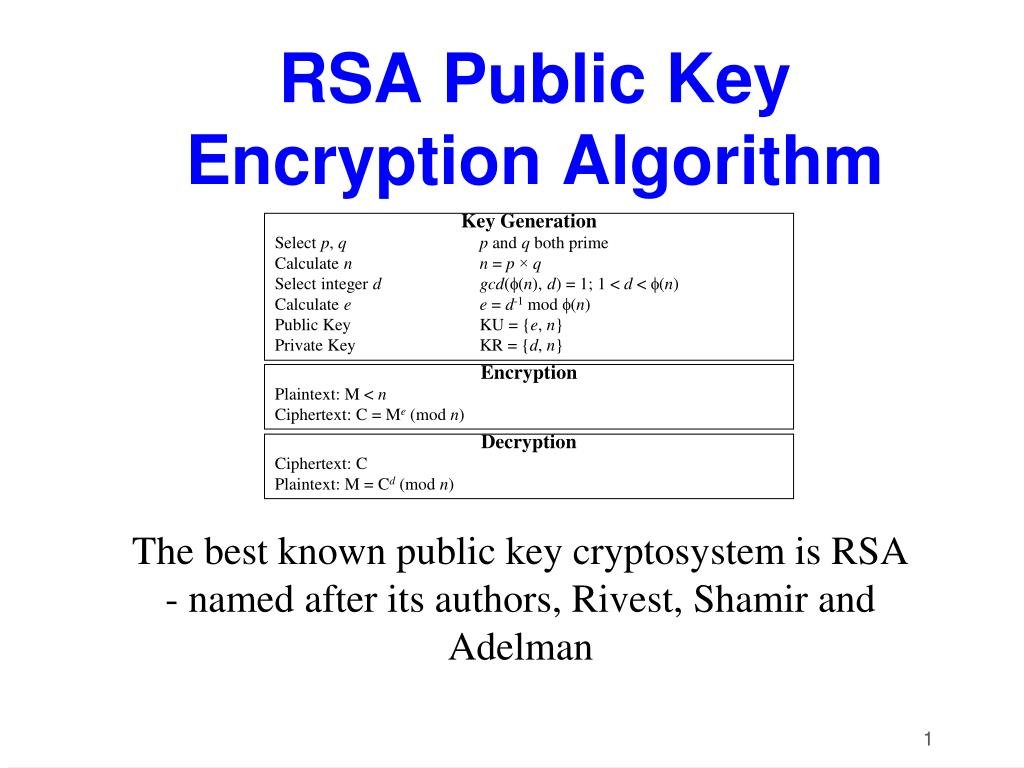
In the high-stakes world of cybersecurity, a single, mismanaged cryptographic key can unravel layers of protection, exposing sensitive data, disrupting critical services, and devastating trust. This isn't theoretical; it's a hard lesson learned by countless organizations, from enterprise giants to government agencies. For anyone operating within a Cisco ecosystem—which means a vast majority of businesses today—mastering Best Practices for RSA Key Management and Security in Cisco Environments isn't just good practice; it's non-negotiable for maintaining robust, defensible security posture.
RSA keys, a cornerstone of public-key cryptography, underpin everything from secure web traffic (TLS/SSL) and VPNs to digital signatures and authentication in Cisco routers, firewalls, and collaboration platforms. But the strength of RSA encryption is only as good as the management practices surrounding its keys. A strong algorithm with a weak handling process is like locking your front door but leaving the key under the mat.
At a Glance: Your RSA Key Management Checklist for Cisco Environments
- Establish Clear Policies: Define formal, documented policies, roles, and responsibilities for the entire key lifecycle.
- Inventory Your Keys: Maintain a comprehensive inventory of all RSA keys, their purpose, strength, and ownership.
- Choose Strong Keys: Opt for 3072-bit RSA keys as a minimum, preferably 4096-bit, and use modern padding schemes like RSA-PSS and OAEP.
- Generate Securely: Always generate keys within Hardware Security Modules (HSMs) or trusted cryptographic boundaries using high-entropy sources.
- Store Defensively: Keep private keys encrypted and isolated in secure vaults, KMS, or HSMs, with strict access controls and physical protection.
- Distribute Carefully: Use automated, secure protocols for key distribution, avoiding manual transfers.
- Segment Cryptographically: Separate keys by function (e.g., CA keys vs. server keys) to limit blast radius.
- Rotate Regularly: Implement automated, periodic key rotation, especially for high-impact keys.
- Monitor Vigorously: Log and monitor all key access and usage attempts to detect anomalies or compromise.
- Revoke Swiftly: Establish and test emergency procedures for rapid key revocation and destruction.
- Plan for Disaster: Develop and test disaster recovery plans for key backups and replacements.
- Audit Continuously: Conduct regular audits and threat assessments, including external scans for your Cisco devices.
- Prioritize Forward Secrecy: For TLS, pair RSA certificates with ephemeral Diffie-Hellman (ECDHE) cipher suites.
- Plan Your Migration: Evaluate ECC as a modern alternative, but maintain RSA for compatibility where needed, planning a phased transition.
The Foundation of Trust: Why Key Management Matters So Much
Before diving into the specifics for Cisco, it's crucial to understand why key management isn't just a technical task, but a strategic imperative. Cryptographic keys are the digital "master keys" to your organization's most sensitive information. If they fall into the wrong hands, or if their integrity is compromised, all the sophisticated encryption you've deployed becomes moot.
Think back to the RSA SecurID breach: attackers exploited a vulnerability that allowed them to obtain internal cryptographic "seed" values. This wasn't a direct attack on the strength of RSA itself, but a profound failure in key management—specifically, securing the secrets that underpin the security system. It underscored a fundamental truth: robust key management demands meticulous attention to detail across an entire lifecycle, from birth to destruction.
Laying the Groundwork: Policies, Roles, and Your Key Inventory
Effective key management starts long before a key is ever generated. It begins with clear policy, defined ownership, and a comprehensive understanding of your cryptographic landscape.
Defining Your Cryptographic Charter
You wouldn't build a house without blueprints, and you shouldn't manage keys without a formal policy. This document should outline the entire key lifecycle: how keys are generated, distributed, used, stored, rotated, revoked, and ultimately destroyed. It acts as your organization's cryptographic constitution, guiding all actions and decisions.
Who's Guarding the Keys? Roles and Responsibilities
Security by obscurity doesn't work; neither does security without accountability. Clearly define roles and responsibilities, aligning them with the principles of separation of duties and least privilege.
- Cryptographic Officers: These individuals might be responsible for key generation, backup, and recovery. Their access should be highly restricted and auditable.
- Security Auditors: Tasked with verifying compliance with policies, ensuring no single person has unchecked control over critical cryptographic assets.
- System Administrators: Responsible for implementing key usage within Cisco devices, but without direct access to the private keys themselves where possible.
Your Digital Key Ring: The RSA Key Inventory
Can you quickly list every RSA key used across your Cisco infrastructure? Its purpose? Its owner? When it was created? When it expires? Most organizations struggle with this, and it's a critical vulnerability.
Maintain an up-to-date inventory that details key metadata:
- Creation date and expiration
- Associated algorithm and key length
- Intended uses (e.g., TLS for a Cisco ASA, SSH for a router, VPN, digital signing)
- Ownership and associated applications
- Location of the key (e.g., HSM, specific server, Cisco device)
This inventory becomes your single source of truth, enabling proactive rotation, rapid response to compromise, and crucial auditing.
Choosing Strength Wisely: Algorithms and Key Lengths
The cryptographic algorithms and key lengths you choose dictate the fundamental security of your operations. In the face of ever-advancing computational power, yesterday's strong key might be tomorrow's vulnerability.
The RSA Sweet Spot: Key Lengths
For RSA keys, aim for a minimum of 3072 bits. While 2048-bit RSA is still widely compatible, it's often considered the bare minimum and carries a higher risk of being vulnerable to future quantum attacks or significantly improved classical cryptanalysis within its operational lifespan. Many experts recommend 4096-bit RSA for long-term security margins, especially for certificate authority (CA) roots or high-value assets.
Remember, longer keys come with a performance cost. For high-volume transactional systems, you might balance this with careful risk assessment, but for foundational security, err on the side of strength.
Modern Padding and Exponents
When using RSA, always prefer modern, more secure padding schemes:
- RSA-PSS (Probabilistic Signature Scheme): For digital signatures, this offers stronger security guarantees and greater randomness than the older PKCS#1 v1.5.
- RSA-OAEP (Optimal Asymmetric Encryption Padding): For encryption operations, OAEP significantly enhances security against various adaptive chosen-ciphertext attacks compared to PKCS#1 v1.5.
For the public exponent, stick with 65537 (F4). It's the industry standard, balancing efficiency with mathematical properties crucial for security. Deviating from this without deep cryptographic expertise is a red flag.
Forward Secrecy with RSA and ECDHE
Even when using RSA certificates for authentication in TLS, pair them with ephemeral Diffie-Hellman (ECDHE) for key exchange. This combination ensures forward secrecy, meaning that if your RSA private key is ever compromised, past communication sessions encrypted with that key cannot be decrypted. Cisco devices widely support ECDHE cipher suites, so prioritize their configuration in your SSL policies.
The Genesis of Trust: Secure Key Generation
How your RSA keys are born is as critical as how they're protected throughout their life. A weak genesis can undermine all subsequent security measures.
Harnessing High-Quality Randomness
Cryptographic keys must be truly random. Predictable keys are no keys at all. Ensure your key generation processes leverage tested, high-entropy random number generators. For virtualized Cisco environments, where entropy can sometimes be scarce, consider entropy starvation solutions or integrating with hardware RNGs if your hypervisor and virtual device support it. Learn Cisco RSA key generation and how its native mechanisms ensure a high degree of randomness.
Hardware-Bound Generation: The HSM Advantage
The gold standard for RSA key generation is within a Hardware Security Module (HSM). HSMs are tamper-resistant physical devices designed to generate, store, and protect cryptographic keys. They create keys in an isolated environment, preventing their extraction and enforcing strict usage policies. For critical infrastructure, CA keys, or keys securing highly sensitive data, generating them directly within a Cisco device (which typically uses software-based key generation or a trusted platform module where available) might not meet the highest security bar. Integrating Cisco devices with an external HSM for key generation and storage offers superior protection.
Always destroy any intermediate "seed" values or unnecessary key copies immediately after a key pair has been successfully generated and secured.
Fort Knox for Keys: Secure Storage and Distribution
Once generated, your private RSA keys become highly prized targets. Their secure storage and distribution are paramount.
The Isolation Principle: HSMs, KMS, and Vaults
Private keys should never reside unprotected on general-purpose servers or file systems. Instead, they belong in isolated, purpose-built secure environments:
- Hardware Security Modules (HSMs): As mentioned, HSMs not only generate keys securely but also store them. They provide a "cryptographic boundary" that prevents private key material from ever leaving the device, even when performing cryptographic operations.
- Key Management Systems (KMS): These systems automate the entire key lifecycle and often integrate with HSMs or provide their own secure storage. They offer centralized control and auditing.
- Cloud Key Management Services (KMS): Cloud providers offer managed services for key generation, storage, and management, often backed by their own HSM infrastructure.
- Secret Vault Solutions (e.g., HashiCorp Vault): These provide a secure, centralized service for storing and accessing sensitive data, including cryptographic keys, with robust access controls and auditing.
For Cisco devices that store their own RSA keys (e.g., self-signed certificates, SSH host keys), ensure the device's own security features are maximized. This includes secure boot, strong passwords, and restricted administrative access.
Encrypting Keys at Rest
If keys must reside on a file system (e.g., on a Cisco server running an application that uses them), they must be encrypted at rest. Use strong encryption, preferably with another key or a robust passphrase. Crucially, store the encrypted key separately from the data it encrypts.
File Permissions and Least Privilege
For any software-based key files, strict file permissions are non-negotiable. Unix-like systems should enforce 600 permissions (owner read/write only). Access should be granted only to the specific service account that needs to use the key, and that account should operate with the absolute minimum necessary privileges. Never hardcode keys directly into application code.
Secure Distribution: Automate, Don't Manual
Avoid manual key transfers via USB drives, email, or insecure network shares. If a key needs to move, use automated, secure protocols like TLS or SSH for delivery directly into the application or cryptographic module. For automated deployments in Cisco environments, integrate with your KMS or secret management solution to inject keys securely, rather than manually copying them.
Strategic Segregation: Cryptographic Isolation
Don't put all your eggs in one basket, cryptographically speaking. Segmenting your keys limits the "blast radius" of a compromise.
Logically or physically separate keys used for different purposes. For instance:
- CA/PKI Infrastructure Keys: These are your root of trust. They should be completely isolated, often air-gapped offline.
- TLS Server Keys: For your web servers, VPNs (Cisco ASA, AnyConnect), and other devices.
- SSH Host Keys: For securing access to your Cisco routers and switches.
- Data Encryption Keys: For encrypting sensitive customer data at rest.
A compromise of a web server's TLS key should not automatically mean your entire PKI is compromised. This segmentation forces attackers to achieve multiple, independent compromises to gain broader access.
The Ticking Clock: Automated Key Rotation
Even the strongest key has a shelf life. Over time, cryptographic attacks evolve, and the probability of compromise through brute force or other means increases. Regular key rotation is your countermeasure.
Setting Rotation Cadence
Automate periodic rotation for all intermediate and end-entity keys. The frequency depends on the key's importance and exposure:
- High-impact keys (e.g., CA intermediate keys, highly exposed public-facing server keys): Shorter rotation periods, determined by risk analysis, perhaps annually or even more frequently.
- Less critical keys: Might be rotated every 2-3 years.
Modern certificate authorities like Let's Encrypt demonstrate the power of automated, short-lived certificates. While not all Cisco environments can fully emulate this, adopting shorter lifespans and automated renewal processes wherever possible significantly reduces risk. Many Cisco devices support automated certificate enrollment via SCEP or EST, which can facilitate rotation.
Always Vigilant: Monitoring and Anomaly Detection
A static security posture is a vulnerable posture. You need eyes and ears on your keys at all times.
Logging All Key Activity
Implement robust logging for all key management operations:
- Key generation, distribution, and destruction.
- Access attempts to private keys (successful and failed).
- Cryptographic operations performed with keys.
- Administrative actions related to key management systems or individual keys.
Integrate these logs with your Security Information and Event Management (SIEM) system.
Hunting for Anomalies
Beyond just logging, actively monitor these logs for unusual patterns or anomalies.
- Excessive failed access attempts.
- Cryptographic operations at unusual times or from unexpected sources.
- Tamper events reported by HSMs.
- Sudden spikes in key usage.
Anomaly detection can be your early warning system, indicating a potential compromise or insider threat. For Cisco devices, ensure SNMP traps and syslog messages related to cryptographic events are properly configured and sent to your monitoring platforms.
Graceful Exit: Revocation and Destruction
Keys, like people, sometimes need to be retired or, in unfortunate circumstances, immediately removed from service.
Rapid Revocation for Compromised Keys
Have an automated, tested emergency process for rapidly revoking compromised keys organization-wide. This means:
- Updating Certificate Revocation Lists (CRLs).
- Utilizing Online Certificate Status Protocol (OCSP) responders for real-time status checks. Ensure your OCSP responders are highly available and tested.
- For keys not tied to PKI (e.g., SSH keys), swiftly remove them from all authorized_keys files or revoke their access via IAM systems.
A slow revocation process renders the act of revocation almost useless if attackers can continue to exploit the compromised key for hours or days.
Cryptographic Erasure for Destruction
When a key reaches the end of its lifecycle, simply deleting its file isn't enough. Implement cryptographic erasure techniques to prevent key reconstruction. This often involves securely wiping the storage location or overwriting the key material with random data multiple times. For HSMs, this typically involves a dedicated "zeroize" function that cryptographically destroys all key material stored within.
Preparing for the Worst: Disaster Recovery
What if your primary key management system fails? Or your HSM is destroyed? Without a solid disaster recovery plan, you risk losing access to your data or crippling your ability to authenticate.
Encrypted Backups
Maintain encrypted backups of your keys. These backups should be stored in separate, geographically diverse locations, ideally using air-gapped offline storage for maximum protection against network-based attacks. The keys used to encrypt these backups must, of course, be managed with equal rigor.
Detailed Recovery Plans
Document detailed disaster recovery plans for restoring key backups and replacing compromised or lost keys. This includes:
- Step-by-step procedures for recovery.
- Contact information for relevant personnel.
- Required tools and resources.
Crucially, regularly test these plans. A documented plan that hasn't been tested is merely a hypothesis. Include your Cisco key management processes in your broader disaster recovery exercises.
Staying Ahead: Auditing and Threat Assessment
Security is not a destination; it's a continuous journey. Regular auditing and proactive threat assessment keep your RSA key management robust.
Routine Annual Audits
Perform routine annual audits that examine every aspect of your key management infrastructure:
- Policies and procedures.
- Personnel roles and responsibilities.
- Technologies (HSMs, KMS, Cisco device configurations).
- Processes (generation, rotation, revocation).
- Compliance with industry standards and regulatory requirements.
These audits should ideally be performed by independent third parties to ensure objectivity.
Continuous Threat Assessment
The cryptographic landscape is constantly evolving. New attacks emerge, and computational power increases. Stay informed about:
- New encryption-breaking advances, such as progress in quantum computing, which could one day render current RSA key lengths insecure.
- Vulnerabilities discovered in specific cryptographic implementations or Cisco software versions that might affect your key management.
Regularly assess your key strength and adjust key lengths or algorithms accordingly.
External Scans for Cisco Devices
Use external scanning tools (e.g., Qualys SSL Labs, Nessus) to check the public-facing cryptographic posture of your Cisco devices (firewalls, load balancers, web servers). These tools can verify:
- Supported cipher suites and protocol versions (ensuring obsolete ones like SSLv3, TLS 1.0, TLS 1.1 are disabled).
- Key sizes and certificate chain correctness.
- OCSP stapling and HSTS settings.
Internally, leverage Cisco's own security tools and configuration scanners to ensure best practices are applied to SSH and other internal cryptographic uses.
Cisco Specifics: TLS, SSH, and PKI Integration
Within a Cisco environment, RSA keys are everywhere. Here's how to apply these best practices directly to your network and security infrastructure.
Hardening TLS in Cisco Devices
Cisco devices from ASAs and routers to UCS servers and collaboration platforms use TLS extensively.
- Prioritize ECDHE + RSA Cipher Suites: Configure your Cisco devices to prefer cipher suites that offer forward secrecy (e.g.,
ECDHE-RSA-AES256-GCM-SHA384). Disable weak or legacy cipher suites. - Disable Obsolete Protocols: Ensure SSLv3, TLS 1.0, and TLS 1.1 are explicitly disabled. Configure for TLS 1.2 as a minimum, with TLS 1.3 being the preferred choice where supported.
- Certificate Enrollment: Leverage SCEP or EST protocols within Cisco IOS/IOS-XE, ASA, and other platforms to automate certificate enrollment and renewal from your internal PKI or public CAs. This facilitates key rotation and reduces manual error.
- Trust Anchors: Properly manage the trustpoints and CA certificates on your Cisco devices, ensuring only trusted roots are present.
Securing SSH for Network Access
SSH is often the backbone for managing Cisco network devices. RSA keys play a crucial role here.
- Strong SSH Host Keys: Generate RSA host keys at 3072 bits or higher on your Cisco routers and switches. Ensure these keys are protected with strict file permissions on the device's filesystem (where applicable) and that the device's configuration is securely stored.
- Rotate Host Keys: Establish a defined cadence for rotating SSH host keys on your network devices.
- User Keys (Optional): For user authentication, while Ed25519 is often preferred for performance and modern security, if using RSA user keys, ensure they meet the same strength requirements (3072+ bits) and are protected client-side.
- Bastion/Jump Hosts: Implement a jump host or bastion host strategy with tightly controlled access to centralize and audit SSH access to your Cisco network. This significantly reduces the attack surface for your device's SSH keys.
When Disaster Strikes: Incident Response Planning
Despite all best efforts, a private key compromise can happen. Your ability to respond swiftly and effectively is paramount.
Plan and rehearse an incident response that specifically covers private key compromise:
- Containment: Identify affected systems and immediately revoke the compromised certificate(s).
- Eradication: Issue replacement certificates with new key pairs. Update server configurations to use the new keys.
- Recovery: Invalidate sessions that relied on the compromised key. Communicate the breach as required by policy and law.
- Post-Mortem: Conduct a thorough review to understand how the compromise occurred and implement preventative measures.
Include Cisco-specific configurations and commands for certificate revocation and installation in your incident response playbook.
Evolving Cryptography: RSA vs. ECC Migration
The cryptographic landscape isn't static. While RSA remains foundational, Elliptic Curve Cryptography (ECC) offers equivalent security with significantly smaller key sizes and faster performance.
Balancing Compatibility and Future-Proofing
- New Deployments: For new Cisco deployments and applications, prefer ECC certificates (ECDSA) where they are fully supported by all interacting systems and clients. ECC keys are generally more efficient for mobile devices and performance-sensitive applications.
- Legacy Systems: Maintain RSA for legacy systems that may not support ECC or require specific RSA-based protocols. Do not force ECC where compatibility issues will create operational disruption.
Phased Migration Strategy
A successful migration from RSA to ECC involves careful planning:
- Inventory: Understand your current cryptographic estate: which systems use RSA, what key sizes, and what dependencies exist.
- Piloting: Begin with pilot programs for ECC in less critical environments or new applications.
- Mixed Mode: Run mixed-mode configurations during transitions, where both RSA and ECC are supported, allowing for a gradual shift.
- Communication: Clearly communicate changes to stakeholders, especially if client-side updates are required.
Empowering Your Cisco Environment with Key Management Solutions
Managing RSA keys manually across a complex Cisco environment is a recipe for errors and vulnerabilities. Modern key management solutions are designed to automate and secure this process.
- Hardware Security Modules (HSMs): For the highest level of assurance, integrate your Cisco PKI and critical application servers with enterprise-grade HSMs. These provide a root of trust, enforce policy, prevent private key extraction, and offer a clear audit trail. Many Cisco products can integrate with HSMs for key storage and operations.
- Key Management Systems (KMS): A dedicated KMS can automate key generation, rotation, and distribution. It centralizes control, simplifies management, and integrates with HSMs for backend security. Look for KMS solutions that can integrate with Cisco devices via protocols like SCEP, EST, or even proprietary APIs.
- Key Management Interoperability Protocol (KMIP): This open standard enables various key management technologies to interact seamlessly, allowing you to use a central KMS/HSM solution to manage keys for a diverse set of Cisco and non-Cisco devices.
- Cloud Key Management Services: If you're leveraging Cisco's cloud offerings or public cloud infrastructure, consider utilizing cloud-native KMS (e.g., AWS KMS, Azure Key Vault, Google Cloud KMS). These services offer fully managed key generation and storage, often backed by FIPS 140-2 validated HSMs, simplifying compliance and operational overhead.
When evaluating any solution, conduct in-depth assessments against your organization's specific security and operational requirements. Regularly review the controls and certifications of your chosen providers to ensure ongoing trust.
The Path Forward: A Commitment to Cryptographic Excellence
Securing your Cisco environments with robust RSA key management isn't a one-time project; it's an ongoing commitment to cryptographic excellence. By establishing clear policies, leveraging strong algorithms and secure generation methods, and diligently protecting, rotating, and monitoring your keys, you build a resilient defense against an ever-evolving threat landscape.
Embrace automation, integrate with purpose-built key management solutions, and foster a culture where cryptographic hygiene is understood as a fundamental pillar of your overall security strategy. Your data, your systems, and your organization's reputation depend on it.